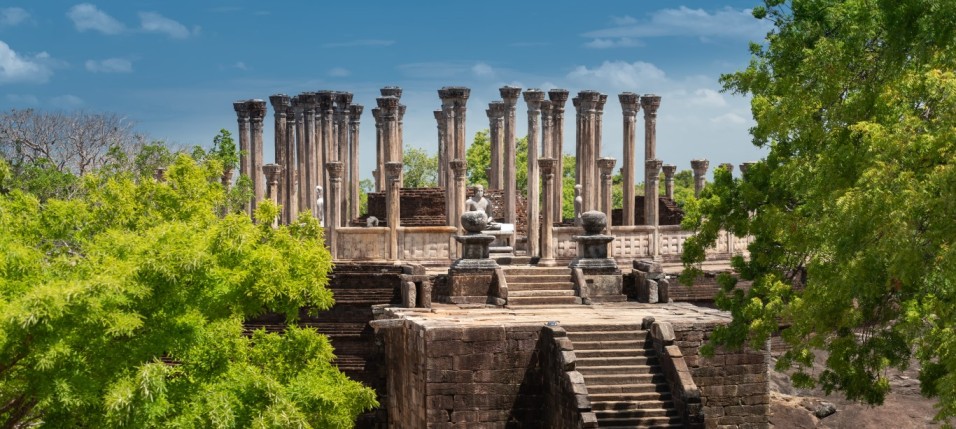

Polonnaruwa is one of the great archaeological treasures of Sri Lanka. As an ancient capital filled with monumental ruins, sacred structures, and royal remains, it offers a powerful encounter with the island's medieval past. The city is spacious, dignified, and full of stonework that still carries the presence of an era defined by kingship, devotion, and urban ambition.
What makes Polonnaruwa remarkable is its sense of order and scale. Ruins are spread across a wide landscape, yet the site never feels chaotic. Instead, it reveals a carefully planned world of temples, audience halls, image houses, reservoirs, and royal architecture. Walking through Polonnaruwa is like moving through the memory of a kingdom still visible in stone.
A City of Royal Vision
Polonnaruwa speaks of political power and cultural achievement. The ruins suggest a city that was both ceremonial and practical, shaped by rulers who understood architecture, religion, and water management at a high level. Many of its surviving structures are admired not only for historical importance, but for artistic strength and the calm monumentality they still project.
The sacred sculptures and temple remains found here are among the most memorable in Sri Lanka. They give the city a spiritual gravity that complements its royal identity, making Polonnaruwa an essential destination for travelers interested in art, archaeology, and heritage.
Why Polonnaruwa Endures
Polonnaruwa endures because it feels both grand and contemplative. It is a place where silence, stone, and history work together to create a lasting impression. For anyone exploring Sri Lanka's ancient cities, Polonnaruwa stands as one of the island's most rewarding and visually powerful journeys into the past.